



What is a Load Cell?
The Complete Guide to Force Measurement Sensors
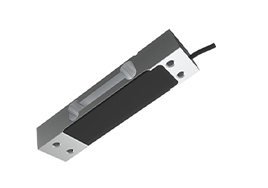 A load cell is a precision electromechanical sensor that converts applied mechanical force (weight, pressure, or tension) into a proportional electrical signal. This electrical output can be measured, recorded, and used to control or monitor industrial processes. Load cells are the critical link between the physical world of weight and force and the digital world of measurement systems, control systems, and data analysis.

At their core, load cells contain strain gauges—thin wire elements that change electrical resistance when subjected to mechanical strain. As force is applied to the load cell, the strain gauges deform proportionally, creating a measurable change in electrical resistance that is converted into a standardized output signal (typically 4-20mA or 0-10V).
Modern load cells range from small point-load sensors measuring just a few kilograms to massive platform scales capable of measuring hundreds of tons. They come in various configurations, materials, and electrical interfaces to meet specific application requirements across industries.
Why Load Cells Matter for Your Business
In industries ranging from manufacturing and agriculture to medical devices and construction, accurate force measurement is fundamental to operational efficiency, quality control, and safety compliance.
Common Industry Challenges We Solve:
✔ Measurement Accuracy: Ensuring consistent precision across varying load ranges and environmental conditions
✔ Durability Requirements: Withstanding harsh operating environments, temperature fluctuations, and repetitive loading cycles
✔ Integration Complexity: Seamlessly connecting force sensors to existing control systems and data networks
✔ Compliance Standards: Meeting industry-specific certifications and regulatory requirements
✔ Total Cost of Ownership: Balancing upfront investment with long-term reliability and minimal maintenance
How Does a Load Cell Work?
Load cells operate through a four-step process that converts physical force into measurable electrical signals:

Force Application
Physical force (weight, tension, compression) is applied to the load cell structure.

Strain & Deflection
The force causes microscopic deformation within the load cells load-bearing element.

Strain Gauge Response
Internal strain gauges detect this deformation and convert it to electrical resistance change.

Signal Transmission
A precision amplifier converts the resistance change into a standardized electrical output signal.
Technical Process Explanation
Strain Gauge Technology: Modern load cells employ advanced foil-based strain gauge technology. These strain gauges are bonded to the structural elements of the load cell in a Wheatstone bridge configuration. When force deforms the load cell structure, all strain gauges experience proportional strain changes that work together in the bridge circuit to produce a precise, amplified electrical signal proportional to the applied force.
Excitation & Amplification: The strain gauge bridge requires a stable excitation voltage (typically 5V to 10V DC). As the bridge becomes unbalanced due to applied force, an output voltage difference is generated. This small differential signal is then amplified by precision instrumentation amplifiers to produce standardized output signals.
Calibration & Output: Load cells are factory calibrated to convert the electrical output into force units. The relationship between input force and output signal remains linear across the operational range. Modern digital load cells include onboard electronics to provide digital outputs.
The Main Types of Load Cells
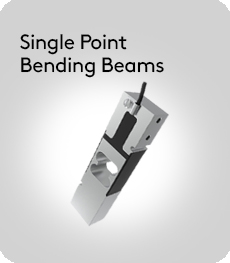
Designed for direct mounting under tanks, hoppers, and platforms where load is concentrated at a single point. These load cells provide high sensitivity and are ideal for small to medium capacity applications.
Ideal For: retail scales, small platform scales, tank weighing | Capacity: 5 kg to 300 kg
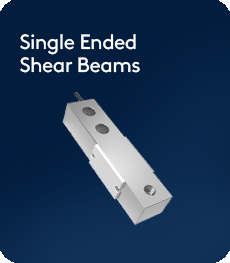
Distributed load sensors with strain gauges positioned to measure shear stress. Excellent for industrial weighing platforms and applications requiring load distribution across larger surface areas.
Ideal For: industrial platform scales, batch weighing, animal scales | Capacity: 50 kg to 5,000 kg
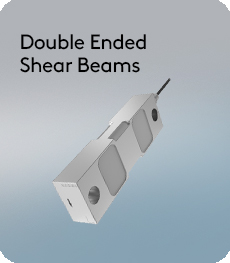
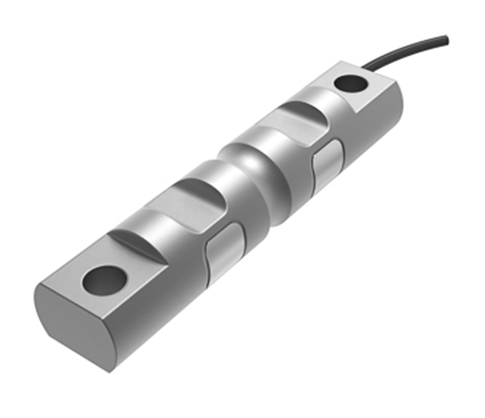
Symmetrical load cells with strain gauges at both ends, providing superior load distribution and environmental stability. Widely used in heavy industrial weighing applications.
Ideal For: vehicle scales, large platform scales, industrial weighing systems | Capacity: 500 kg to 50,000 kg+

Versatile sensors measuring both compression and tension, ideal for overhead weighing applications, hanging scales, and force measurement in production systems.
Ideal For: crane scales, conveyor belt tension, machinery force measurement | Capacity: 10 kg to 5,000 kg
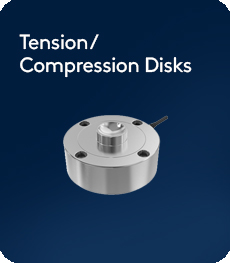
Compact, disc-shaped sensors for measuring forces in confined spaces. Excellent performance in hostile environments and applications requiring extreme overload protection.
Ideal For: confined space mounting, machinery automation, safety systems | Capacity: 1 ton to 500+ tons
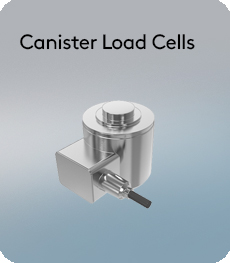
Heavy-duty, sealed cylindrical designs for demanding environmental conditions. Used extensively in construction equipment, vehicle weighing, and hazardous area applications.
Ideal For: on-board vehicle weighing, construction equipment, hazardous environments | Capacity: 100 kg to 10,000+ kg
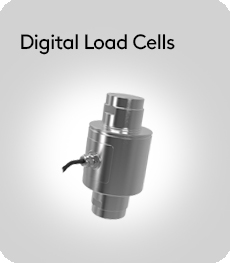
Intelligent sensors with integrated electronics providing digital outputs (USB, Ethernet, CANbus, J1939). Enable advanced features like data logging and sophisticated process control.
Ideal For: modern control systems, IoT integration, precision agriculture | Capacity: All ranges from 1 kg to 100,000+ kg
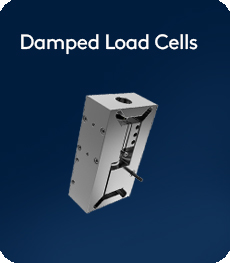
Specialized designs with integrated damping to reduce measurement noise and signal oscillations. Essential in dynamic weighing applications and vibration-prone environments.
Ideal For: conveyor scales, in-motion weighing, dynamic force measurement | Capacity: All ranges, application-dependent
Core Features That Meet Industry Needs
Precision Strain Gauge Technology
Advanced foil-based strain gauges manufactured in-house, delivering repeatability and accuracy within ±0.1% to ±1% of full scale - the tightest tolerances in the industry.
Rugged Construction
Engineered for industrial durability with stainless steel, alloy steel, or protective coatings. Rated for extreme overload conditions and capable of withstanding thousands of load cycles.
Temperature Stability
Designs compensated for temperature effects ensure consistent, accurate measurements across environmental variations typical of industrial, agricultural and outdoor applications.
Multiple Output Options
Standard analog outputs (4-20mA, 0-10V) plus digital connectivity (USB, Ethernet, CANbus, J1939, RS485) enabling seamless integration with any modern control or data system.
Sealed & Protected
IP65+ environmental ratings protect against dust, moisture and corrosive elements, ideal for food processing, chemical, agricultural and marine environments.
Certification & Compliance
Compliant with NTEP (US), OIML, EN15000, EN280, ISO standards and other regulatory frameworks. Custom certifications available for specialized applications.
Industry Applications
Load cells enable critical functions across multiple industries:
Precision Agriculture
Grain flow sensors integrate with GPS systems to calculate precise yield per unit area, combining grain weight data with moisture analysis and location data. Farmers gain actionable yield data for precision variable-rate application.

Construction Safety
Telescopic handlers and lift equipment must comply with EN15000 and EN280 safety standards. Load cells provide real-time monitoring and automatic equipment retraction if overturn conditions are detected.
Vehicle Weighing & Logistics
On-board weighing systems are integrated into tens of thousands of commercial vehicles globally. Fleet managers optimize payload utilization, reduce over-weight penalties, and streamline billing accuracy.

Medical Devices
Patient hoist systems incorporate tilt sensors for safety across varying patient positions and orientations. Healthcare facilities can safely assist patients while maintaining load stability verification.
Industrial Manufacturing
Load cells integrate directly under tanks and hoppers, providing real-time material flow data to production control systems. Production lines maintain consistent batch sizes and eliminate material waste.
Aerospace & Critical Applications
Aerospace and defense applications demand absolute reliability and traceability. VPG Force Sensors precision load cells support weight and balance operations, stress testing and safety-critical systems, with full documentation for compliance with aerospace standards.
